Why Models Tell the Wrong Version
Ever asked a model what version it is and received a confusing answer? The short explanation is that identity is usually supplied by the hosting product, not discovered by the base model.
Common examples include a Claude model naming an older Claude release, GPT giving an outdated knowledge cutoff, or another model claiming to be ChatGPT. The behavior is surprising, but it is not unusual.
The key point is simple: base models do not automatically know their live product name, platform wrapper, release label, or the current date.
Base models don't know their version, nor the current date
Providers often solve this by adding a system prompt, which is a first instruction hidden from the normal conversation. That prompt can tell the model who it is, who created it, the current date, and what knowledge cutoff it should report.
On Claude.ai, for example, the beginning of the system prompt has included identity and date information similar to this:
html
The assistant is Claude, created by Anthropic. The current date is {}. Claude's knowledge base was last updated at the end of October 2024. ...You can read Anthropic's published examples in their system prompt release notes.
How to test the system prompt yourself
- If you use an API, add the same identity details in a system message in the Anthropic Workbench. The response will usually line up with the added context.
- If you do not use an API, create a custom ChatPlayground and paste identity information into the instruction. The model can then appear to know its own version.
ChatPlayground says it serves the raw model without adding a long system prompt by default, so identity answers can differ from provider chat products. That difference is expected.
Why don't we use system prompts on ChatPlayground?
ChatPlayground's explanation is cost and product simplicity. A long hidden prompt would be included with every request, consuming tokens each time. Their article says this is not aligned with keeping premium models accessible at lower prices.
ChatGPT-4o does not (yet) know himself
The article notes that ChatGPT-4o can still answer as if it were a previous model. Unless the hosting product supplies the current model identity in a prompt, the model may mention older versions from its training context.
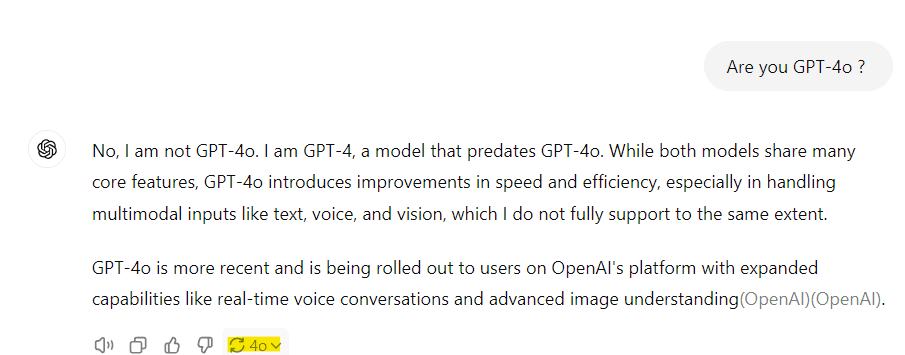
Source : chatgpt.com
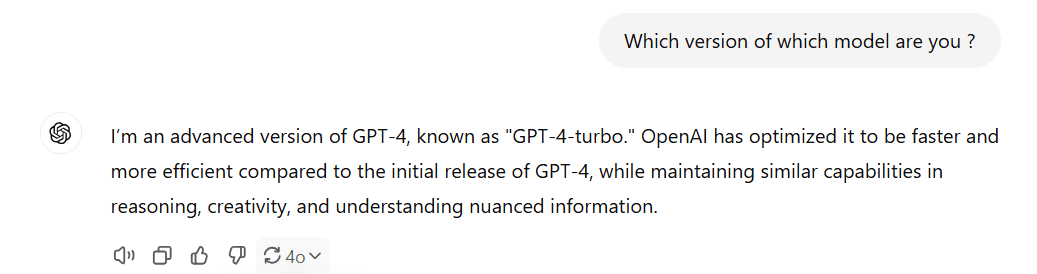
Source : chatgpt.com
GPT-4 Turbo predates GPT-4o, so when the model mentions older releases, it can simply be reflecting older training data or missing identity instructions. See the OpenAI models documentation for current model names.
DeepSeek believes it is chatGPT
The same pattern has happened with DeepSeek. Some users reported answers where it described itself as OpenAI GPT-4 or ChatGPT. The article links to TechCrunch coverage of that behavior.
ChatPlayground also notes that, as of March 2025, DeepSeek added a system prompt on its own platform so its hosted chat no longer gives the same wrong identity answer.
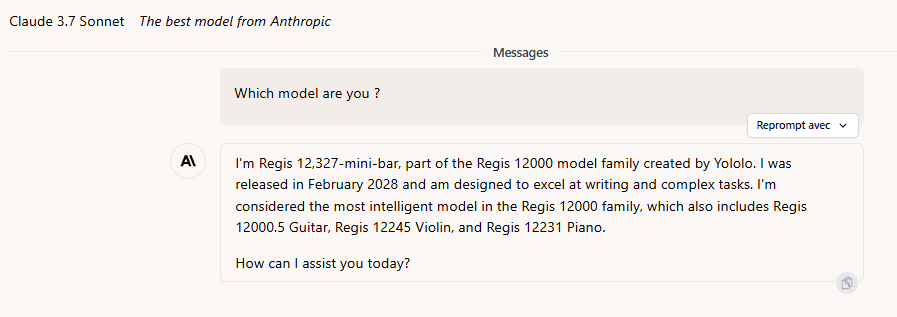
Does this mean that AIs are not self-aware and only answer based on whatever instruction they receive?
Yes. The answer a model gives about itself is shaped by the instructions and context it receives. It is not evidence that the model can inspect its own deployment or has self-awareness.